
Carbon-Ceramic Brake Rotors Are So Expensive. Why Should I Upgrade?
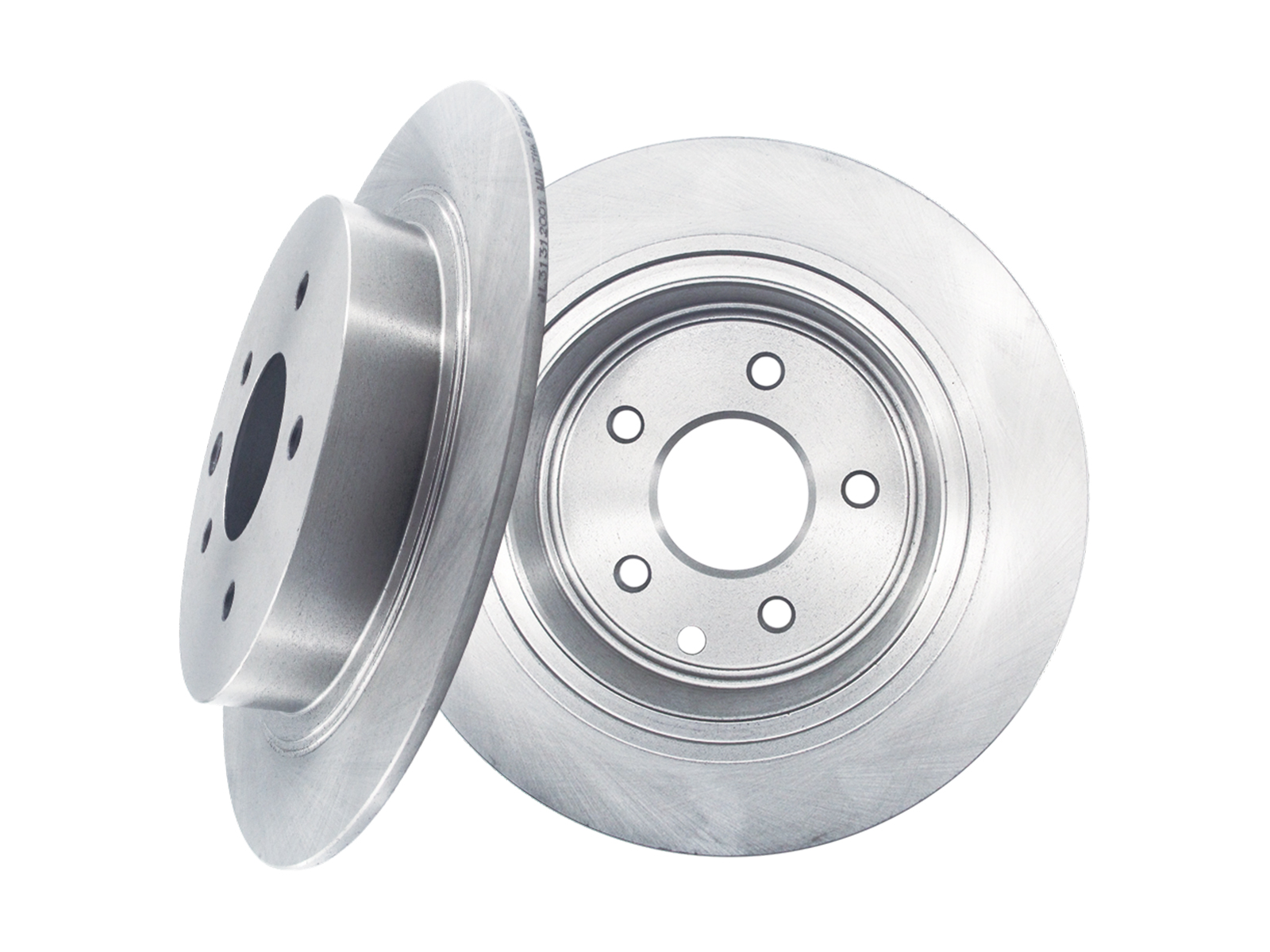
There's a saying that if your car comes equipped with carbon-ceramic brakes and you use them properly, the rotors will likely last the lifetime of the vehicle. While carbon-ceramic brakes have many advantages, the above statement is somewhat exaggerated. However, it raises a core question: Are such expensive brakes really worth the money?
On the Cadillac CT5-V Blackwing, the carbon-ceramic brake option costs an extra $9,000. BMW M prices it at $8,500, and Porsche charges over $9,000. For models already equipped with numerous high-priced features, the carbon-ceramic brake option is often one of the most expensive upgrades.
So, under what circumstances is it actually worth it?
Cast iron is an ideal material for brake rotors.
It's relatively inexpensive, easy to cast and machine, and crucially, it has higher thermal conductivity than materials like steel. The working principle of brakes is to convert a car's kinetic energy (forward motion) into heat energy through friction when the brake pads contact the rotors.
Therefore, the thermal performance of the rotor is paramount.
Emmanuele Bureletti, Senior Engineering Manager at Brembo North America, stated in an interview that cast iron rotors absorb heat more effectively. Compared to other common materials, cast iron has a lower rate of heat absorption, which helps the brake pads dissipate some of the heat.
This is the same reason cast iron is good for frying pans. But anyone who has used a cast iron skillet knows how heavy it is. Weight is the enemy of cars, and as automotive technology advances, the loads on braking systems continue to increase.
The fundamental reason for the increasing size of brake systems in recent years is the continuous rise in vehicle performance limits. Today's cars are more powerful and heavier, and tires also significantly impact the braking system. Advancements in modern tire technology have greatly improved vehicle deceleration efficiency, further increasing the workload on the brakes.
Increased load means more heat is generated.
Larger cast iron rotors help manage this heat better and improve the braking effect. However, rotor size cannot increase indefinitely due to installation space constraints and, of course, weight concerns.
Brake rotors are part of the "unsprung weight," meaning their mass affects a vehicle's ride comfort and handling more significantly than its "sprung weight." Furthermore, rotors are rotating mass; their weight importantly impacts acceleration, braking, and steering performance.
If vehicle weight, especially unsprung weight and particularly the unsprung rotating mass of the brake rotors, can be reduced, vehicle performance can be greatly enhanced.
In pursuit of weight reduction, Dunlop developed the first carbon-fiber-reinforced carbon-matrix (i.e., carbon-carbon) brakes for the Concorde supersonic airliner as early as the 1960s. By the 1980s, such brakes were widely used in Formula 1. However, even today's high-performance carbon-carbon brakes used in top-tier racing are completely unsuitable for civilian road use because they barely function at low temperatures.
Moreover, even now, manufacturing these carbon-carbon brakes remains extremely costly and time-consuming.
Another type, carbon-reinforced silicon-carbide-matrix (i.e., carbon-ceramic) brakes, retains the weight advantage of carbon-carbon brakes while functioning properly at low temperatures. Although carbon-ceramic rotors are still expensive and have long production cycles, they are less difficult and costly to produce compared to carbon-carbon rotors.
The production cycle for a carbon-ceramic rotor is about a few days, whereas a carbon-carbon rotor takes about 4 months. In comparison, Brembo can produce a cast iron rotor in just about 2 hours.
The German company SGL Carbon pioneered the application of carbon-ceramic brakes in production cars, with the 2001 Porsche 911 GT2 being the first to feature the technology. A year later, Brembo's first carbon-ceramic brakes debuted on the Ferrari Enzo. In 2009, SGL Carbon and Brembo formed a joint venture dedicated to developing and producing carbon-ceramic brakes.
Today, this company is one of the leaders, if not the largest supplier, of carbon-ceramic brakes globally.
The carbon-ceramic matrix used in their rotors has a density about one-third that of cast iron. While various figures exist regarding actual weight savings, the previous-generation BMW M3 and M4 rotors serve as a good example.
A BMW technical document shows the standard front rotors for that car weighed 30.6 lbs (approx. 13.88 kg), while the carbon-ceramic front rotors weighed only 17.1 lbs (approx. 7.76 kg), nearly halving the weight. The carbon-ceramic rear rotors for the previous-generation M3/M4 showed similar weight reduction percentages. Notably, BMW's carbon-ceramic rotors were actually slightly larger than their cast iron counterparts.
This sounds great, but we also need to look objectively at the limitations of carbon-ceramic brakes.
A braking system is essentially a hydraulic lever system that multiplies the relatively small force from the driver's foot on the pedal into a massive force applied to the road surface to slow the car down. In production cars, 20-30 lbs (approx. 9-13.6 kg) of pedal effort can achieve 1G of deceleration, a process known as "force multiplication."
In this aspect, carbon-ceramic brakes offer no inherent advantage.
Compared to a cast iron brake system, a carbon-ceramic system has no special design to increase the mechanical output of the braking system itself. Therefore, carbon-ceramic brakes hold no advantage in the "force multiplication" stage. When people say carbon-ceramic brakes feel better or stop harder, it's not because of the carbon-ceramic material itself, but because the automaker has tuned that specific carbon-ceramic brake system to have a higher "force multiplication coefficient."
Furthermore, the ultimate performance limit of a braking system depends on the tires. Tire performance directly determines how much braking force can be effectively used.
Imagine two identical cars with the same tires, the only difference being one has cast iron brakes and the other has a carbon-ceramic kit. The brakes themselves don't change the tire's grip limit. Conversely, tire performance greatly affects the amount of energy the brakes need to handle.
As mentioned earlier, carbon-ceramic and cast iron rotors are fundamentally different materials. Carbon-ceramic has much lower thermal conductivity than cast iron, and its mass and heat capacity are also much lower. This is both an advantage and a disadvantage.
The advantage is that, thanks to the ceramic material properties, carbon-ceramic rotors can withstand the high temperatures generated during extreme braking by today's faster, heavier, and grippier vehicles. Brembo states carbon-ceramic rotors can operate stably in the range of 1000-1400°F (approx. 538-760°C) and even withstand temperatures exceeding 1800°F (approx. 982°C).
This is why carbon-ceramic brakes are praised for their resistance to brake fade on the racetrack.
On the other hand, because carbon-ceramic rotors are lighter and less dense, they heat up and cool down quickly. This can subject other components in the braking system to significant thermal stress from frequent temperature cycling. Cast iron rotors, with their better heat retention, keep other components at relatively lower temperatures.
Automakers need to find other ways to dissipate heat from the brake pads. Therefore, designing adequate cooling solutions for the braking system becomes crucial.
Beyond carefully designed cooling systems using external ducts and internal rotor vanes, the fact that carbon-ceramic rotors are not homogeneous materials has additional implications. The length, diameter, and orientation of the carbon fibers all affect the material's heat capacity.
Adding extra coatings and layers can also increase heat capacity. This is why Brembo and SGL Carbon offer variants like CCB brakes (with added ceramic friction layers on both sides) and CCW brakes (using a five-layer carbon-ceramic structure). These designs allow the braking system to use smaller components for further weight reduction, but the corresponding manufacturing processes are more complex and costly.
This design is necessary because, typically, on models offering both cast iron and carbon-ceramic options, the carbon-ceramic rotors are larger. This stems directly from the fact that carbon-ceramic rotors reflect more heat back to the brake pads during intense braking.
To ensure the stability of the friction material (brake pads), the pad size must be increased. Larger pads require larger calipers, and naturally, the rotor size must also increase—a chain reaction.
However, there is a virtuous cycle here. Reducing unsprung rotating mass means there's less weight to control. Theoretically, automakers can leverage the weight-saving advantage of carbon-ceramic brakes to use smaller tires, softer springs and dampers, smaller anti-roll bars, etc.
This largely explains why Ferrari and McLaren models come standard with carbon-ceramic brakes. Besides needing a braking system capable of handling the immense braking loads of high-performance cars, the cascading optimization benefits from weight reduction are a key reason.
Now, let's return to the initial question that sparked this exploration: Can carbon-ceramic brake rotors really last a lifetime? The answer is: In some cases, yes.
Component wear depends heavily on usage. Assuming similar frequency and conditions of use, for daily driving not involving track use, carbon-ceramic rotors can likely last the life of the car. In everyday road driving, their service life is exceptionally long.
While brake pads will still need periodic replacement, the rotors themselves can indeed have a surprisingly long life. However, once track use is involved, the situation changes completely.
Under frequent, high-intensity braking, the carbon fibers within the carbon-ceramic rotor will eventually be "ablated," reducing its heat capacity. At road speeds, this happens only minimally, if at all. But on a track, carbon fiber ablation occurs much faster, depending on the car, track type, and driving style.
For example, if you drive a 5,300-lb (approx. 2,404 kg) new BMW M5 on a track, frequently reaching speeds over 150 mph (approx. 240 km/h) on long straights, and you're a late-braking driver who pushes the braking point as far as possible before stomping on the brakes, then even with carbon-ceramics, don't expect the rotors to last very long.
But if your car is a Porsche 911 GT3, weighing around 3,330 lbs (approx. 1,510 kg), and you're driving on a track like Lime Rock Park with only one heavy braking zone. Furthermore, your driving style is relatively gentle—not stomping on the brakes or intentionally braking late, but braking a bit earlier and lighter—then the lifespan of the carbon-ceramic rotors will be significantly extended.
It is precisely because of these usage differences that even for high-performance models like the Porsche 911 GT3 RS, Porsche still offers cast iron brakes as an option. Automakers know that some customers will frequently take their cars to the track. For these users, choosing more affordable-to-replace cast iron rotors makes more economic sense.
A few more points to note.
During use, carbon-ceramic rotors do not wear thin like cast iron rotors. However, as the carbon fibers ablate, their weight decreases. This means carbon-ceramic rotors won't crack or warp from track use like cast iron rotors can—another significant advantage.
Consequently, many carbon-ceramic rotors have a "minimum weight" marked on their hubs. Once the rotor's weight falls below this value, it needs to be replaced.
Therefore, there's no simple answer to "Are carbon-ceramic brakes worth it?" But based on what we know, the high upfront cost of carbon-ceramic brakes might be offset by their exceptionally long lifespan and the numerous other advantages the technology brings.
In the end, it comes down to the consumer—how you plan to use your car and what you value most.