
How to Choose Brake Pads? OEM/Ceramic/Semi-Metallic Differences Explained – A Detailed Guide by HUSCH
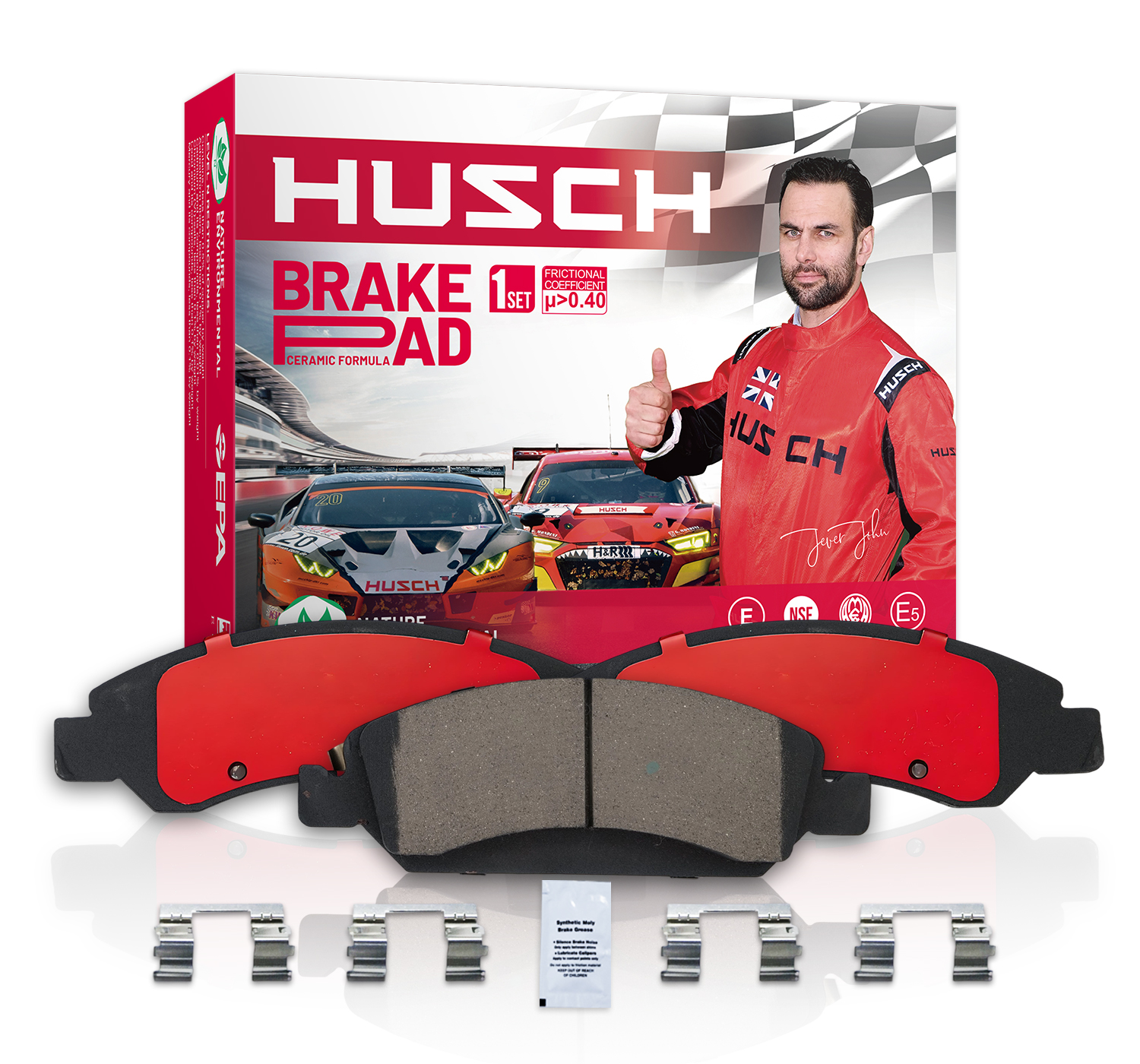
Braking is the first line of defense for vehicle safety, and brake pads, as the core component of the braking system, directly affect the stability of every stop. With so many types of brake pads on the market—primarily OEM, ceramic, and semi-metallic—many car owners feel overwhelmed. Today, we’ll break down the performance, suitable scenarios, and pros and cons of each to give you a clear, detailed guide!
I. In-Depth Analysis of the Three Main Types of Brake Pads
1. OEM Brake Pads: The “Worry-Free” Original Match
Core Composition: Custom-formulated by the vehicle manufacturer, usually a blend of semi-metallic, low-metallic, or organic materials, with variations across different makes and models.
Key Advantages:
• Perfect Compatibility: Designed to match the original brake rotors, offering linear pedal feel without issues like grabbing or fading.
• Warranty Support: Meets OEM quality standards; some come with manufacturer warranty and can be handled through dealerships.
• Broad Suitability: Suitable for daily commuting, highway driving, and light mountain roads.
Drawbacks:
• Higher Price: Typically 30%-50% more expensive than aftermarket alternatives.
• Conservative Performance: Tuned for smoothness and durability rather than aggressive braking.
Ideal For: Owners who prefer a safe, hassle-free choice, especially those with luxury or electric vehicles.
2. Ceramic Brake Pads: The Quiet & Clean “Comfort Choice”
Core Composition: Made from ceramic fibers, mineral fibers, and resin—metal-free and environmentally friendly.
Key Advantages:
• Excellent Noise Reduction: Stable friction coefficient ensures quiet operation with minimal squealing.
• Low Dust & Easy Cleaning: Produces fine, non-sticky dust that won’t dirty your wheels.
• High Heat Resistance: Resists brake fade during continuous braking (e.g., downhill or hard stops).
• Long Service Life: Moderate hardness reduces wear on brake rotors.
Drawbacks:
• Softer Initial Bite: Can feel less responsive when cold, requiring deeper pedal engagement.
• Higher Cost: Usually around twice the price of basic semi-metallic pads.
• Reduced Low-Temperature Performance: Slightly less effective in cold or wet winter conditions.
Ideal For: Drivers prioritizing comfort and cleanliness, especially those with electric cars or family MPVs.
3. Semi-Metallic Brake Pads: The Durable “Performance Powerhouse”
Core Composition: 30%-60% metal fibers (steel wool, copper, iron) mixed with resin and friction modifiers.
Key Advantages:
• Strong Braking Power: High friction coefficient delivers quick, aggressive stopping force.
• Wear Resistance: Durable material extends pad life, often 20%-30% longer than OEM or ceramic pads.
• Stable Low-Temperature Performance: Reliable braking in cold, wet, or snowy conditions.
Drawbacks:
• Noise & Dust: Prone to squealing and produces black dust that sticks to wheels.
• Higher Rotor Wear: Harder material may accelerate rotor wear and grooving.
• Heat Fade Risk: Performance can decline during prolonged heavy braking.
Ideal For: Drivers who frequently tackle mountain roads, off-road conditions, or prefer a more responsive brake feel.
II. Tips for Selection & Replacement
Check Thickness: Replace when thickness is below 3mm or if the wear indicator contacts the rotor.
Buy from Authorized Channels: Choose reputable suppliers to avoid counterfeit products—verify anti-counterfeit codes and certifications.
Replace in Pairs: Always replace both sides to maintain balanced braking and prevent pulling or vibration.
Follow the Break-In Period: Drive 200-300 miles gently after installation, avoiding hard stops for proper bedding.
Match Pad to Vehicle: For heavier EVs, consider heat-resistant ceramic or high-performance OEM pads; for compact cars, semi-metallic pads offer great value.
Choosing brake pads doesn’t have to be confusing—focus on your driving habits and needs. With this guide, you can make a safe, cost-effective decision. If you need brake products, choose HUSCH.
When Should You Consider HUSCH?
• Scenario 1: You’re faced with overpriced dealership pads or confusing aftermarket options.
• Scenario 2: You experience squealing, excessive dust, longer stopping distances, or a soft pedal feel.
• Scenario 3: Your EV needs smoother, more consistent braking or extra capacity for its weight.
• Scenario 4: You’re planning a long trip, driving in mountains, or upgrading your braking system.
At HUSCH Braking, safety is our ultimate commitment. We understand the core performance of different brake materials, but our real role is to translate that knowledge into reliable products perfectly matched to your vehicle.