
Factory Brakes Are "Adequate," So Why Upgrade to a HUSCH Braking System?
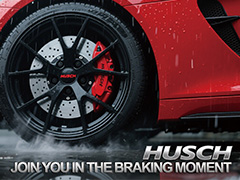
A good braking system should make you feel both comfortable and safe. While factory brakes are generally sufficient for ordinary driving situations, why would anyone consider upgrading to improve braking performance? When a split-second decision can mean the difference between safety and danger, what a driver needs is absolute assurance far beyond mere "adequacy"—this is the very reason the HUSCH Braking System exists.
The HUSCH Braking System primarily addresses the following two issues:
NO.1 Insufficient Braking Power
The vehicle lacks adequate braking torque to effectively slow down the rotating wheels (technically: to provide maximum deceleration force).
Factory brakes typically use only a single-piston or dual-piston caliper with a small piston pump. At high speeds, this is sometimes insufficient, leading to longer braking distances and potential accidents. In our previous tests, you can clearly see that factory brakes on stock cars require a certain distance for a 100km/h to 0 stop. Upgrading the brakes can reduce this braking distance by approximately 13%. Additionally, some factory brake pads are relatively weak; at higher speeds, they may not provide sufficient stopping power, posing a safety risk.
NO.2 Brake Fade
There are situations where, after prolonged operation, a vehicle may experience brake fade and dangerously lose braking power. This is because continuous braking (e.g., on a track) can lead to brake fade due to inadequate cooling. In such cases, you need to upgrade the braking performance to resolve the issue of brake fade.
Of course, the benefits of brake upgrades also include resolving issues like brake noise, vibration, poor pedal feel, and braking instability. Since these don't typically constitute direct safety threats, we'll mention them only in passing.
How Does HUSCH Improve Braking Performance?
Before you get excited about upgrading your braking system, it's crucial to understand that the effectiveness of braking performance largely depends on the capabilities of your tires and suspension. This is key because if you're using hard-compound tires, upgrading your brakes will hardly improve overall braking performance.
In simple terms, how to improve braking performance:
If your engine has strong power, focus on increasing braking torque.
If your brakes get too hot, affecting performance, focus on improving resistance to brake fade.
How Does HUSCH Increase Braking Torque?
Increase Brake Disc Radius: Larger brake discs allow for greater braking torque. Braking torque equals the force applied by the brake pads multiplied by the distance from the center of the wheel. By increasing this distance, we can increase braking force.
Increase Caliper Piston Area: Increasing the size (or number) of pistons means you have more surface area to apply specific pressure. If pressure remains constant and the area increases, the applied force increases.
Increase Line Pressure: Pressing the pedal harder makes the car brake harder because the hydraulic line pressure increases. By increasing this line pressure (through a brake pedal with greater mechanical leverage or using vacuum assist), you can increase braking torque.
Increase the Friction Coefficient Between Brake Pads and Discs: Self-explanatory. If you can increase the friction force between the pads and discs (which comes down to material selection—data often provided by pad manufacturers), you can increase braking torque.
How Does HUSCH Improve Resistance to Brake Fade?
- Larger Brake Discs: Increasing the diameter or width of brake discs means more mass and surface area to dissipate heat. Proper cooling of the discs improves resistance to fade.
- Vented Discs: Perhaps the most effective method for cooling brake discs. The airflow through the vanes in the center of a vented disc significantly improves cooling. Almost all production cars use vented discs on the front axles, as the front brakes handle most of the braking force.
- Slotted and Drilled Brake Discs: The purpose of slots or holes is to allow gases and minute particles generated during braking to escape. On plain discs, this layer of gas can prevent full contact between the pad and disc. Slotted discs are often preferred, as drilled discs can be prone to premature cracking due to stress concentrations around the holes. You won't typically see drilled discs in most motorsports, except in drifting.
- Brake Pad Selection: Choosing the right pad for the application is critical. Some pads have a high coefficient of friction at low temperatures (providing strong initial bite before warming up), while others are more effective at higher temperatures. Pads are available for various operating temperature ranges, and selection should be based on intended use. Street pads often have high initial bite but performance degrades as temperatures rise. Race pads tend to operate with a higher, more consistent coefficient of friction across a wider range of high temperatures, making them suitable for repeated, heavy braking.
- Brake Cooling Ducts: Extremely common in racing, these are air ducts that channel cool air directly into the wheel well, ideally onto the brake disc, helping to lower the temperature of the braking system and prevent thermal fade.
Most passenger cars do not come with brake cooling ducts because street cars generally don't have as much power and their braking systems aren't under the same level of stress.
In summary, upgrading to HUSCH is not merely swapping parts; it's a complete "capability overhaul" of your vehicle's braking system. It transforms your braking performance from passively "adequate" to actively "in control," raising the safety threshold to an entirely new level. When danger strikes, or when you're pursuing the thrill of driving, that instant, decisive, and powerful braking response is the most crucial value HUSCH delivers to you.