
Ceramic vs. Metallic Brake Pads: How to Choose?
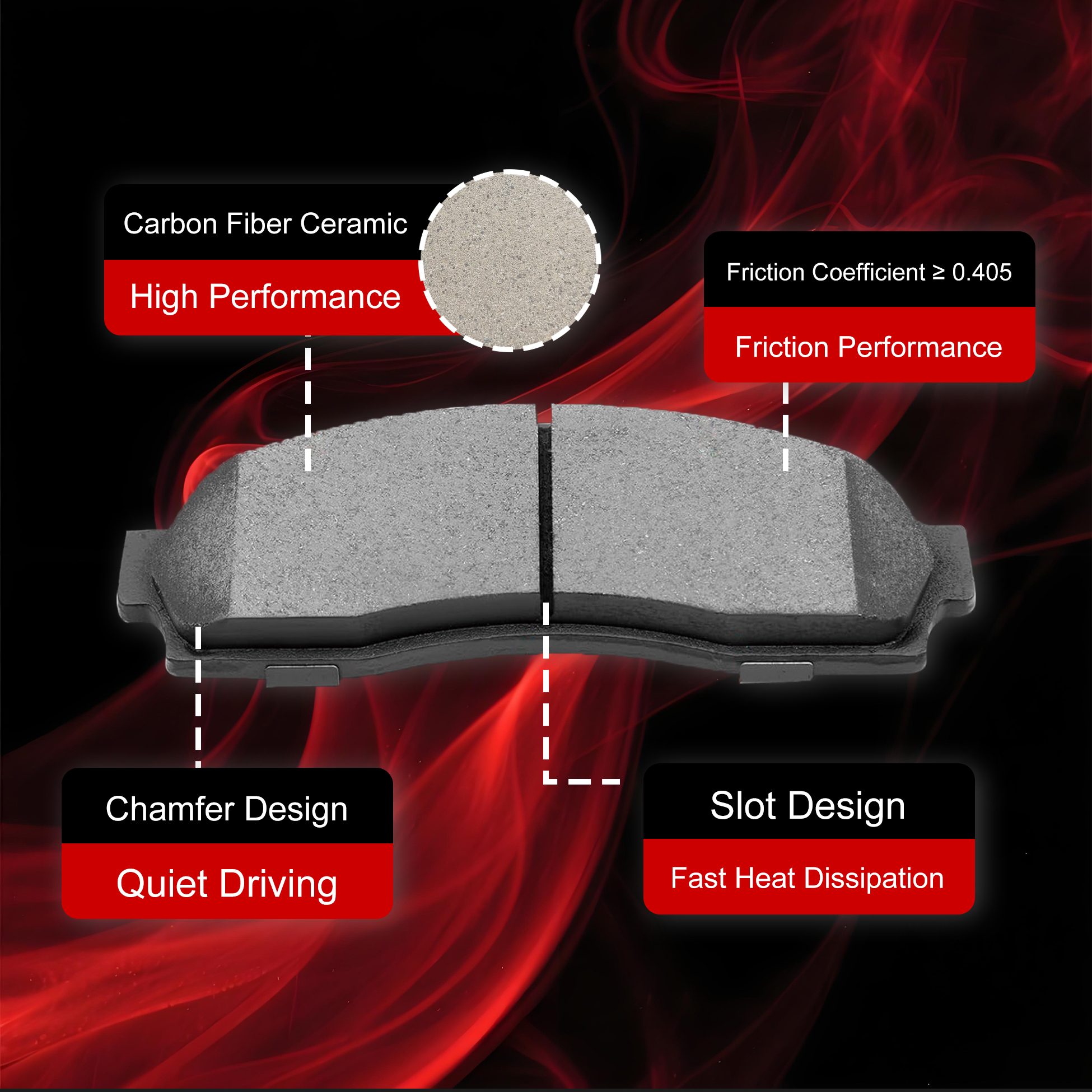
Car owners often ask, "Ceramic pads are popular now, should I switch to a set?" But do you really need to? Let us break it down for you.
In terms of price, ceramic brake pads are often more expensive, but there are exceptions depending on your vehicle model. For example, on certain platforms, semi-metallic and ceramic brake pads for a Ford F-150 can be similarly priced.
Now, let's understand their respective advantages and disadvantages so you can make the right choice for your next set.
Metallic or Semi-Metallic Pads: Pros and Cons
Suitable for extreme driving styles, such as racing or trucking applications. Metallic or semi-metallic pads are excellent for demanding performance uses because they offer consistent pedal feel and dissipate heat well, which is crucial for track days or other demanding applications like towing.
Strong cold-weather performance. Metallic pads work effectively even in very cold conditions, so you don't need to "warm up" your car before they reach their full potential.
Excellent heat dissipation. Brake pads and rotors generate significant heat with repeated use. Metallic pads conduct this heat throughout the system, reducing localized hot spots and preventing brake fade. This is important if you drive in mountainous areas and must use your brakes frequently.
Substantial brake dust. Metallic pads produce more dust than ceramic pads, which will require you to clean your wheels more often.
Noise. Increased brake noise is one of the more annoying characteristics of metallic or semi-metallic pads, but it's often the trade-off for high performance.
Increased rotor wear. The enhanced braking performance of metallic pads comes from increased friction between the pad and rotor. More friction means more wear, and you may need to replace your rotors more frequently as their material wears thinner.
Ceramic Pads: Pros and Cons
- Very quiet. Ceramic brake pads are known for their quiet operation, which is why they are popular on luxury vehicles.
- Strong wear resistance. A set of ceramic pads often lasts longer than metallic pads because they are harder and wear down less.
- Extremely low brake dust. Ceramic pads produce significantly less brake dust than organic or metallic pads.
- Reduces rotor wear. Ceramic pads are generally less "aggressive" than semi-metallic pads, which reduces friction and wear on the brake rotors.
- Poor initial bite in cold conditions. Ceramic pads need to warm up to achieve maximum braking performance. This can be an issue if you live in a cold climate or during the first few laps if you take your car to the track.
- Less heat conduction. Your ceramic brake pads don't transfer friction heat away as readily, so heat can build up during extreme driving and lead to overheating issues in the braking system. Overheating can cause brake fluid to lose its pressurization ability and can also warp brake rotors.
- Higher cost. Depending on your vehicle, you may end up paying more for a set of ceramic brake pads.
As you can see, both ceramic and metallic brake pads have their own advantages and disadvantages. The right choice truly depends on your driving style and conditions.
For normal daily commuting needs in mild climates, ceramic brake pads are an excellent solution due to their low-noise and low-dust operation. They also tend to last longer than metallic pads, meaning fewer trips to the shop over the life of your vehicle.
Conversely, if you want a pad that provides outstanding stopping power because you enjoy driving on the track, you'll want to use metallic or semi-metallic pads. This may also apply if you frequently drive on highways during your commute and want strong braking power in case the person in front of you does something unwise and you need to avoid them. Mountain driving, driving in cold climates, or heavy-duty trucking applications are also where metallic or semi-metallic pads "shine."
Brand Recommendation: HUSCH Braking
HUSCH Braking focuses on braking system performance and solutions. We don't just sell brake pads, rotors, and kits. We are dedicated to using deep expertise and precise product matching to help every car owner make the most optimized and safest braking choice based on their unique vehicle, driving habits, and environment.
HUSCH Braking's Unique Advantages
We leverage systematic expertise and product design to provide you with an intelligent solution that goes beyond a simple "either/or" choice:
A Professional, Scenario-Based Decision Framework, Not Just Simple Sales: We don't generically recommend one material. Instead, we provide clear decision logic:
We recommend our Ceramic Formula if: Your priorities are "Clean, Quiet, Durable." You mainly do city/highway daily driving, value low dust to keep wheels clean, pursue an almost noise-free braking experience, and want to reduce brake rotor wear for longer overall system life.
We recommend our High-Performance Semi-Metallic Formula if: Your core needs are "Powerful, Stable, Heat-Resistant." Your driving style is more aggressive, you often drive in mountainous or winding roads, have towing or hauling needs, or occasionally enjoy track days. You need brakes that demonstrate excellent resistance to heat fade under sustained high load, providing firm, reliable pedal feedback.
Advanced Engineering Formulas That Go Beyond the Traditional Binary Choice: HUSCH's R&D delves into material science. Our products are designed to optimize the weaknesses of traditional materials:
Our Premium Ceramic Formula: Not only maintains the advantages of low noise and low dust but also, through special fiber and filler technology, significantly improves low-temperature initial bite performance. This provides a more linear braking feel in most climate conditions, reducing concerns about "needing to warm up."
Our High-Performance Semi-Metallic Formula: While ensuring powerful braking and excellent heat dissipation, we use special friction material blends and noise-dampening technology to effectively reduce the common noise and vibration associated with traditional metallic pads. We also optimize friction characteristics to provide more balanced protection for brake rotors while delivering strong stopping power, extending overall system life.
Precision Matching and Professional Support System: Choosing is just the first step; correct installation releases full potential. HUSCH provides:
- A precise vehicle fitment system ensures the formula you choose is a 100% match for your vehicle.
- Strict quality control following OE standards ensures stable friction coefficients and reliable durability.
- Professional installation support information provides clear guidance for technicians, ensuring perfect installation and break-in.
Instead of struggling between "ceramic" and "metallic," let HUSCH's professional analysis guide you. Tell us about your vehicle and driving style, and we'll help you cut through the marketing terms to find the braking solution that offers the best balance of performance, comfort, durability, and value for you.
Choose HUSCH, choose tailored braking wisdom.