
The Science Behind Ceramic Brake Pad Fade – And Why One VW Owner Made the Switch
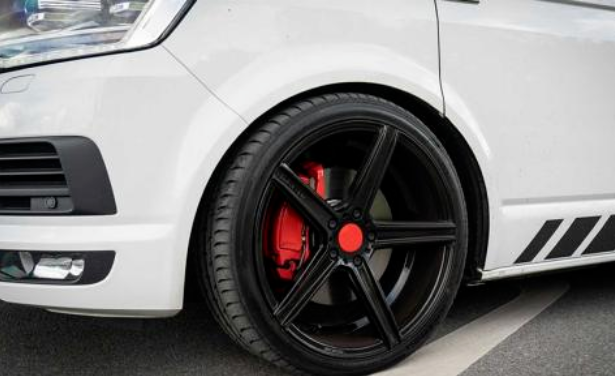
Summary: A real-world review from a Volkswagen owner after upgrading to HUSCH ceramic brake pads.
Ceramic brake pads aren’t “pure ceramic” in the way the name suggests. They’re built on a ceramic matrix composite structure, reinforced with copper fibers, aramid fibers, and non-metallic fillers. Their key advantage? Thermal stability.
When continuous braking pushes rotor temperatures above 300°C (572°F), conventional semi-metallic pads often suffer from sudden friction loss—what we call brake fade. Ceramic compounds, by contrast, dissipate heat faster and expand less under heat. The result: linear stopping power, significantly less dust, and virtually no squeal.
According to SAE J2784, a qualified ceramic brake pad must maintain friction coefficient variation ≤15% after high-temperature cycling at 400°C (752°F). That’s the entry-level benchmark for OE-grade upgrades.
HUSCH Braking goes further. With over a century of friction material expertise, we hold that variance to under 10% —well above industry standards.
Real Driver Feedback:
“I do a lot of highway cruising and city commuting in my VW. Long, gradual downhills. Stop-and-go traffic. My old pads would go soft after a few hard stops—pedal travel got longer, and I could actually smell them cooking.
I switched to HUSCH ceramic pads, precision-tooled to VW factory specs. The difference was immediate. The pedal feels connected—light tap, instant response. Even hard stops are flat and controlled. My kid actually said, ‘Hey, we didn’t lurch forward this time.’
And the noise? Gone. That familiar ‘squeak’ before every speed bump? Now it’s just wind and tire hum. Wheel dust? Barely any. My front wheels actually stay clean for once. I’m washing them less, and my right foot isn’t constantly adjusting the pedal in traffic.”
Why HUSCH?
Who We Are
HUSCH Braking was founded in 1922 in the United Kingdom. For over 100 years, we’ve focused on one thing: friction materials and brake system engineering.
When You Need HUSCH
- You’re descending a long grade and the pedal starts to sink
- You’re in rush hour traffic and every light touch triggers a squeal
- You washed your car two days ago and the wheels are already black
- You want ceramic pads—but you’re afraid of “fake ceramics” that still fade
What HUSCH Fixes
1. Brake fade
HUSCH’s ceramic formulation delivers <10% friction coefficient variance under 400°C cycling. 10 emergency stops from highway speed? Consistent bite, every time.
2. Noise and dust
4-layer shim technology + copper-free, low-dust compound.
City driving noise: <62 dB. Dust reduction: 80%. Wheels stay clean for a month.
3. Fitment anxiety
Vehicle-specific. Tooled to OE data. Clips, radius, thickness—100% match. You don’t need to know piston diameters. Just tell us the year and model.
4. Overpriced? Underperforming?
We don’t build supercar brakes. We build brakes for daily drivers.
Performance? On par with Tier 1 global brands.
Price? About 40% of what dealers charge for OE kits.
No compromise where it counts. No markup where it doesn’t.
Your decision just got easier.
No more choosing between “high-temp” and “low-noise.”
No overpaying for a badge.
No testing unproven compounds with your family in the car.
HUSCH: A century of friction science. Engineered for your daily drive.
Upgrade once. Stop guessing for good.