
Composition Structure and Performance Indicators of HUSCH Brake
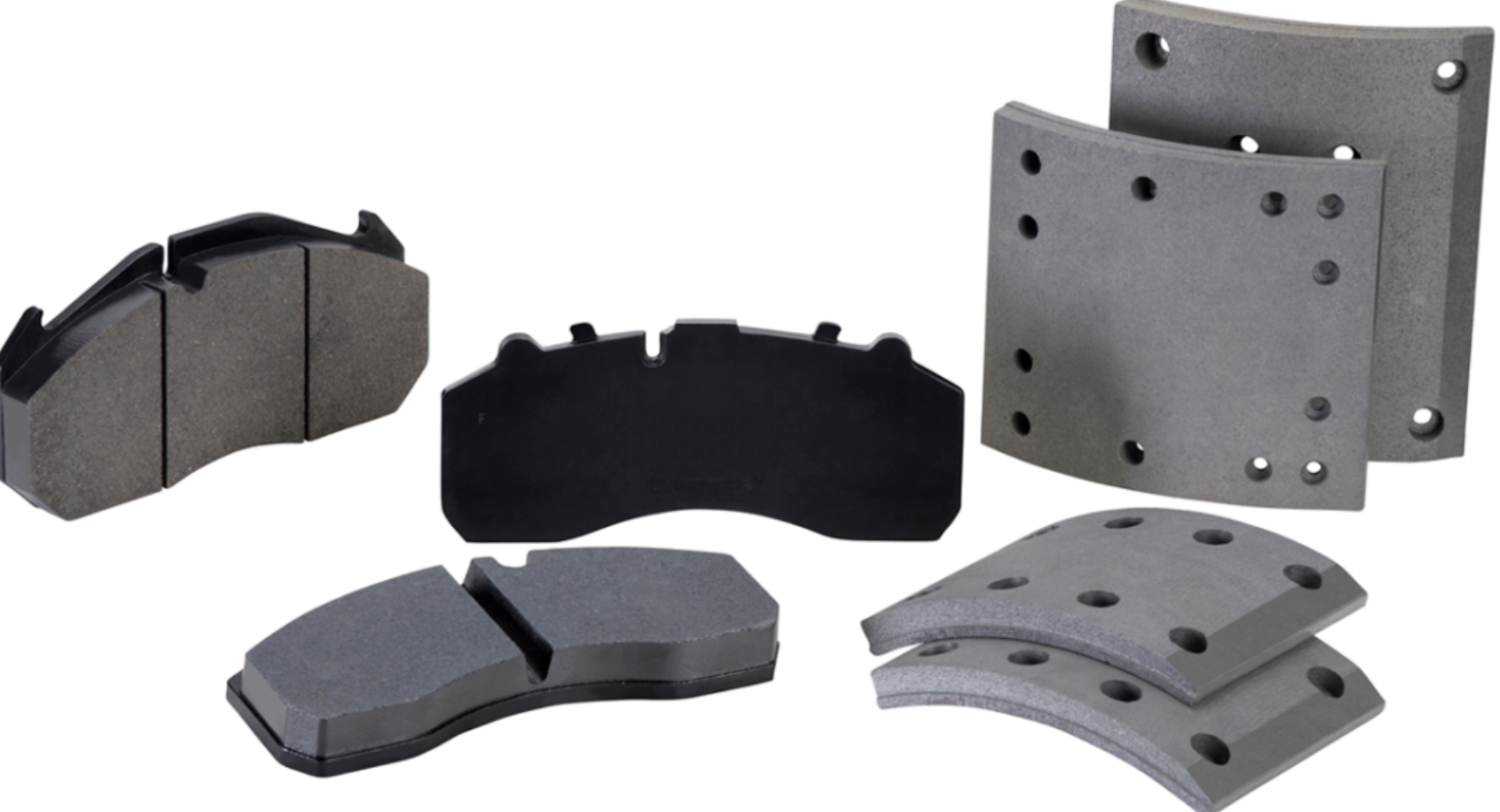
In daily life, many users and consumers of brake pads hold misconceptions about their structure and materials. For example, some believe that smelling the brake pad or looking at its color can determine its quality. This stems from a lack of understanding of the brake pad's material composition.
Furthermore, the performance of the same brake pad can vary significantly under different temperatures, speeds, and braking pressures. Therefore, it is essential to understand the composition structure and performance indicators of brake pads. Today's article will use HUSCH brake pads as an example to explain these concepts to vehicle owners.
1. Market Positioning of HUSCH Brake Pads
HUSCH disc brake pads are generally composed of a break-in coating, friction material, base layer, adhesive layer, backplate, and anti-rust paint. They are core components of high-end automotive braking safety systems and critical safety consumables that enable vehicle deceleration and stopping through friction.
2. Common Problems Addressed by HUSCH Brake Pads
(1) Thermal Fade Issue: During continuous braking, brake pad temperature rises sharply (can reach over 700°C). Ordinary brake pads experience a significant drop in friction coefficient, leading to noticeably increased braking distance.
(2) Poor Braking Experience: Weak braking performance when cold, braking noise/squealing, strong vibration, affecting comfort and driver confidence.
(3) Uneven Wear: Inferior brake pads wear out quickly and may cause abnormal wear to the brake disc, increasing overall usage costs.
(4) Insufficient Material Reliability: Under extreme temperatures, pressures, and speeds, the material structural integrity may be insufficient, posing safety risks.
3. Technical Advantages of HUSCH Brake Pads
(1) Break-in Coating: New brake pads often have poor braking effectiveness when first installed. This coating is designed to improve the friction coefficient before the pad is fully broken in, allowing for good braking performance right after installation.
(2) Friction Material: The friction material is undoubtedly the core part of the entire brake pad. Its formulation directly affects the braking performance and comfort (presence of noise and vibration).
(3) Base Layer: Primarily increases adhesive strength and also assists with NVH (Noise, Vibration, and Harshness), improving ride comfort.
(4) Adhesive Layer: This layer bonds the friction material to the backplate. Its bond strength is crucial to ensure a reliable connection between the backplate and friction material, providing a robust product for effective braking.
(5) Backplate: The backplate supports the overall structure of the friction material and transmits the braking force from the caliper, enabling efficient engagement between the brake pad's friction material and the brake disc.
(6) Anti-rust Paint: Prevents persistent rust marks on the brake disc.
(7) Drum Brake Shoes: Drum shoes generally consist only of the friction block.
(8) Friction Block: Composed of friction material and binder. During braking, it is pressed against the brake disc or drum to create friction, thereby decelerating and stopping the vehicle. Due to friction, the friction block gradually wears down. Generally, lower-cost brake pads wear out faster.
4. Material Composition of HUSCH Brake Pads
Brake pad raw materials are generally divided into four main parts: binder, reinforcing fibers, friction performance modifiers, and fillers.
(1) Binder
The binder is a crucial component in friction materials, influencing thermal fade performance, recovery performance, wear performance, and mechanical properties. Its primary function is to tightly bond all components of the brake pad together, maintaining structural integrity under high temperatures and mechanical stress. The most commonly used binder in brake pads is phenolic resin and its modified versions. Modification aims to improve the resin's toughness and heat resistance.
(2) Reinforcing Fibers
Friction materials reinforced with a single type of fiber have incomplete performance and various shortcomings. Blending several fibers allows for complementary properties and a hybrid effect, resulting in excellent friction material performance. Therefore, to improve the stability of friction materials across temperature ranges and the affinity between fibers and the binder, multiple fibers are often mixed in practical applications.
(3) Friction Performance Modifiers
These are substances added to friction materials to modify the friction coefficient and wear rate, mainly divided into lubricants and abrasives. The primary purpose of lubricants is to reduce variation in the friction coefficient during braking. Abrasives can increase the friction coefficient of the material but also increase wear on the counterpart (disc/drum).
Friction performance modifiers greatly influence the friction characteristics of the material. Increasing lubricant content can improve the stability of the friction coefficient, while increasing abrasive content can increase its volatility. Therefore, coordinating the amounts of lubricants and abrasives in brake friction materials is very important.
(4) Fillers
Fillers are divided into organic and inorganic types, each with different functions. For example, barium sulfate as an inorganic filler can enhance the thermal stability of friction materials and also improve their thermal fade resistance. Rubber powder as an organic filler has excellent viscoelasticity and is often added to brake pads to reduce noise.
5. Performance Indicators of HUSCH Brake Pads
(1) Braking Performance: Refers to the braking capability (friction coefficient) under normal braking conditions (relatively low brake temperatures).
(2) Fade Resistance: On roads like downhill mountain passes, with continuous braking, temperatures rise rapidly, and the brake disc can reach temperatures of four hundred, five hundred, or even over seven hundred degrees Celsius. The braking capability of the pad deteriorates, and stopping distance increases. This phenomenon is called "fade." A lower fade rate is desirable.
(3) Recovery Performance: After experiencing high-temperature fade, can the brake pad quickly regain its original braking performance as temperatures drop? This is also an important measure of brake pad quality.
(4) Wear: Refers to the wear condition of the brake pad during use. During braking, high-quality brake pads form a protective film on the friction surface of the brake disc, reducing disc wear. Inferior pads containing many hard points and impurities can score many grooves on the disc surface, accelerating the wear of both pad and disc.
(5) Noise: In today's environmentally conscious world, noise is also a very important indicator. Many factors can cause braking noise, with the brake pad being just one of them. Generally, it's believed that brake pads that are too hard are more prone to generating noise.
(6) Others: Includes shear strength, hardness, compressibility, thermal expansion, water absorption, adhesion, and other performance indicators.
6. Scenarios / Conditions for Using HUSCH Brake Pads
HUSCH brake pads perform exceptionally well in the following scenarios:
Frequent City Stop-and-Go: Provides smooth, responsive brake feel and reduces noise in congested traffic.
Long Distance Mountain Descents: Strong resistance to thermal fade during consecutive corner braking, inspiring confidence.
High-Temperature Environment Driving: Maintains stable braking performance in summer or hot regions.
Heavy Load or Emergency Braking: Provides sufficient and linear braking force when the vehicle is fully loaded or during short-distance emergency stops.
Scenarios with High Demand for Quietness: Such as nighttime driving in residential areas, where low-noise characteristics are prominent.
7. Where to Purchase HUSCH Brake Pads
HUSCH brake pads are globally popular products and are generally available for sale on platforms like eBay, Amazon, and Walmart.
8. Price Range
HUSCH brake pads are positioned in the mid-range market. Their prices are generally low, typically starting from around $15, depending on the specific vehicle model match.
Summary: HUSCH brake pads are not simple friction blocks but safety system components built on profound material science and precision engineering. Through scientific composition structure and rigorous performance calibration, they systematically address safety and experience pain points in braking, providing a reliable, high-quality choice for value-conscious vehicle owners.