
HUSCH Brake Pads: Explaining Brake Pad Materials to Help You Cho
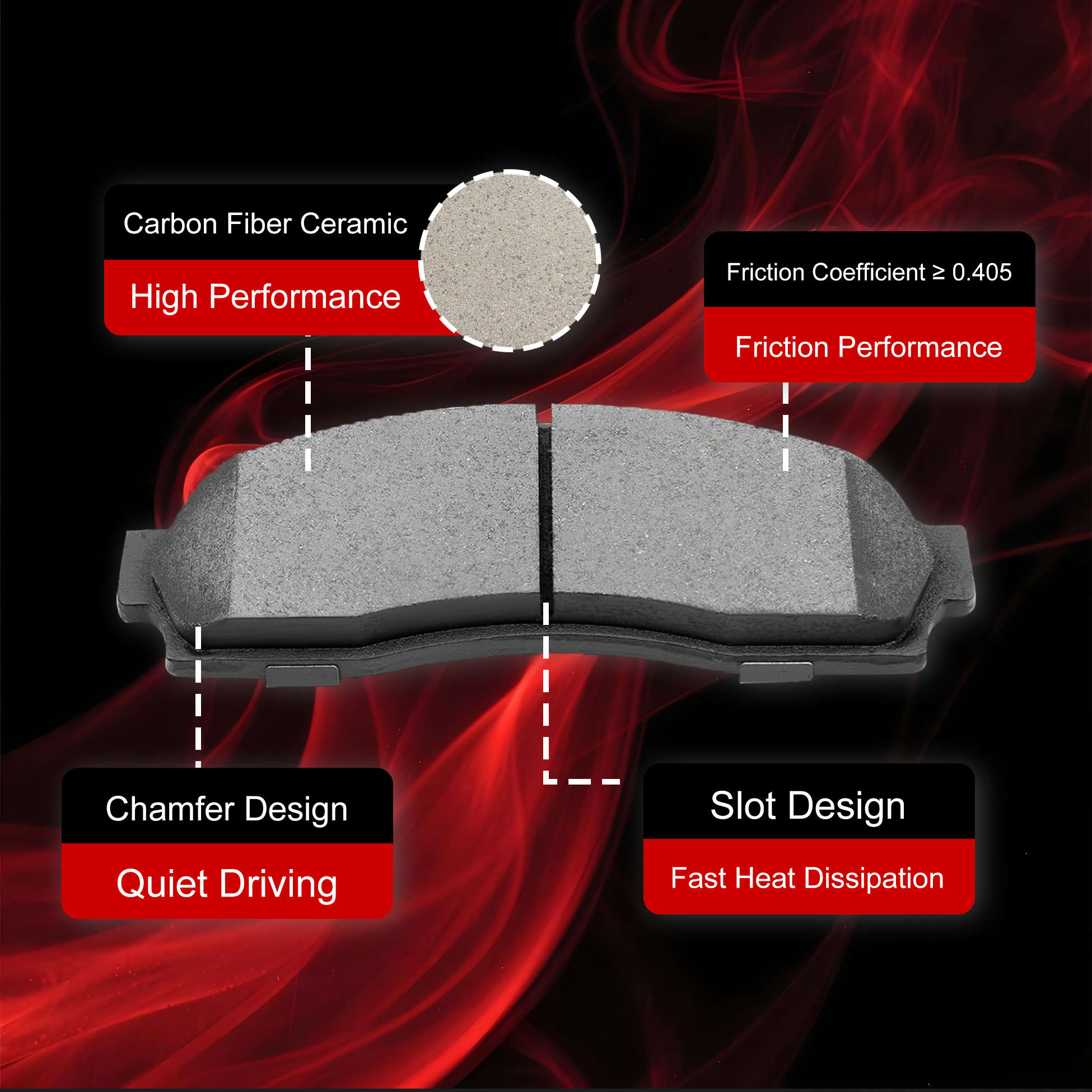
There are countless brake pads on the market, but the friction material formulations essentially boil down to two main types: one called Metallic Formulation and the other called Non-Metallic Formulation, also known as Ceramic Formulation. What are the differences between these two, and how should you choose?
HUSCH Brand Introduction
HUSCH is a professional manufacturer and supplier of automotive brake pads. Our core identity is to provide safe, reliable, and cost-effective disc brake pads for vehicle owners worldwide. We not only manufacture products but are also committed to offering professional braking solutions to help car owners make informed choices in a complex market.
Brake Pad Metallic Formulation
First, Metallic Formulation typically refers to a formulation with a relatively high content of steel wool/fiber. Within the industry, these are further subdivided based on the steel fiber content into: Low-Metallic, Semi-Metallic, and (Full) Metallic formulations.
All metallic brake pads share a common advantage: relatively good heat dissipation from friction, making them generally more suitable for use in heavier vehicles. The downside is that the friction material tends to be harder, making them more prone to producing sharp squealing noises, or noise, during braking. Therefore, if you are sensitive to noise, Metallic Formulation brake pads are not highly recommended.
As for whether the three different metallic formulations are fixedly used for specific car models or brands, the answer is no. This is simply based on customer specifications—determined by long-term usage habits in their region or feedback from vehicle owners—regarding which formulation to produce.
Brake Pad Non-Metallic Formulation
Next is the Non-Metallic Formulation, which, as the name suggests, is a formulation with a low content of steel wool/fiber. The strengths and weaknesses of this formulation are generally the opposite of those of the metallic formulation, making it more suitable for those who place a higher priority on braking comfort.
Observant car owners sometimes notice a thick layer of dust on their wheels while other cars' wheels remain very clean. This is actually also related to the brake pad formulation. Some brake pads generate more brake dust during friction, which easily accumulates on the wheels, making them dirty faster. Some generate less dust, so it doesn't accumulate as easily, and the wheels stay cleaner.
However, there is no absolute correlation between this characteristic and whether the pad is metallic or non-metallic. This is because each type of formulation can be adjusted through material selection to possess certain performance traits or to eliminate unwanted characteristics.
The Most Important Factor: Safety
There are no absolutely "good" or "bad" brake pads on the market, especially in the aftermarket. But the single most critical point is that they must be safe and reliable. After all, brake pads are a safety component. Above all else, nothing is more important than safety!